Neo Earth

Monday, April 18, 2011

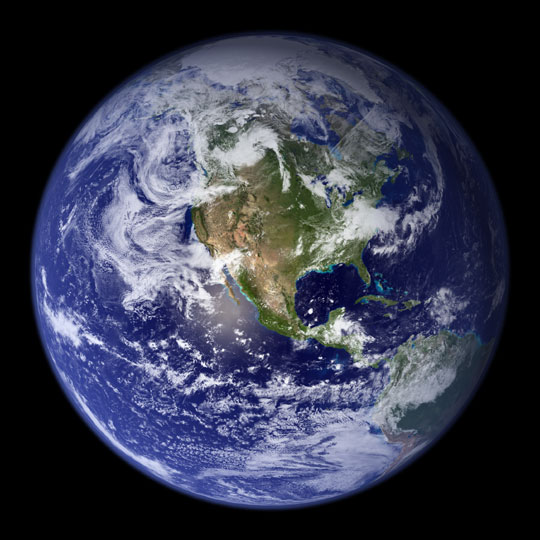
The Earth on Thursday, April 14th 2011

Hey Everyone,


(The Earth from Space)
On Thursday I did my presentation on our very own planet, The Earth.


The Earth's name came from the English/German name which means ground.


The Earth's diametre at the equator is 12,756.32 kilometres. The Earth's mass is 5.97 x 10^24 kilograms. The Earth's density is 5.51 grams per cubic centimetre.


The Earth revolves around the Sun. It takes approximately 365 days to revolve around the sun.
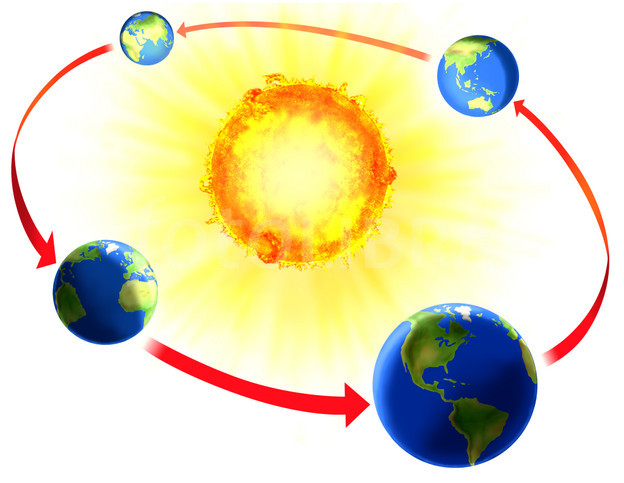


The Earth is tipped on an axis. It is tipped on this axis approximately 23.5 degrees from vertical. The Earth rotates once in 24 hours. It does this at a rate of 1609.344 kilometres per hour.


Where we live on the Earth, there are four seasons. They are spring, summer, autumn, and winter. The least warm recorded temperature is -89.4 degrees celsius. The warmest recorded temperature was 56.7 degrees celsius.


The Earth's atmosphere is made many different gases. The Earth is 78% nitrogen, 21% oxygen, 0.003% carbon dioxide (This increases due to pollution), and other gases such as neon, methane, krypton, and hydrogen.


The Earth is the third planet from the Sun. The minimum distance is 146 million kilometres. The maximum is 152 million kilometres. The mean of this amount is exactly one AU.


The Earth was discovered aproximately 3 million years ago by the first human. I think that they just looked down.


The moon is the brightest object in the sky besides the Sun. The moon orbits around the Earth once a month.

(Each of the four lines symbolizes one of the four elements.)


Above you can see the symbol that stands for Earth. You can use this during Ms. D's class instead of writing the word Earth.


The Earth does not and probably never had rings.


Interesting Facts:

  • The Earth is the densest major body in our solar system
  • The Atmosphere of Earth extends about 10,000 kilometres
  • Molten iron core makes a magnetic field
  • Actually takes 23 hours and 56 minutes to rotate
  • One Earth year is actually 365.2564 days. NOT 365
  • The Extra 0.2564 causes leap years to occur
So that was my presentation on Earth. Here is a video that might tell you a bit more about the Earth:
http://www.youtube.com/watch?v=1V2J0oBj42Y&feature=relmfu


Sunday, April 17, 2011

Venus

Hi everyone!
My celestial body was Venus.


Venus got its name from the Roman god Venus (which is equal to the Greek god Aphrodite), the god of love and beauty. It is probably because it is the third brightest object in the sky.
Some people also refer to it as the Earths sister planet.


Size:
Venus has similar mass to Earth.
Diameter:
• 12.100 km
Mass:
• Scientific Notation: 4.8673 x 1024 kg
• The sixth largest -planet
Density:
• Metric: 5.243 g/cm3

On Venus a day is loner than a year. This is because it revolution takes 224.70 Earth days and its rotation takes 243.018 Earth days.

The atmosphere of Venus is made up of mostly carbon dioxin( 96%), 3.5% of it is nitrogen and 0.05% is made up of carbon monoxide, argon, sulfur dioxide, and water vapor. Venus had a huge amount of water but it all boiled away over time.
Here is a video that showes tha atmosthere of Venus.

Venus is the hottest planet in our solar system. Its temperature is around 500°C. There are also a lot of winds blowing on Venus.

Venus is the second planet from the sun, between Mercury and the Earth. Its average distance from the Sun: 108 million km and 0.723 AU


First peopele studying Venus were the Babylonians. The first peerson pointing a telescope at Venus was Galileo Galilei. The first mission going past Venus was Mariner 2.

There were 4 importante missions to Venus. Akatsuki, Venera 7, Venus Express and Magellan. Venera 7 was the first one landing on the surface of Venus and surviving for 8 minutes.

Venus doesn`t have any moon or rings.

The symbol of Venus is also the symbol of females. It symbolizes a mirror. You can see the symbol in the picture on the top.


5 interesting facts:

The distance between Venus and Earth is 41,840,000 km.
This is a 100 times farther than the Moon.
Venus has a weak or no magnetic fild.
Venus is one of two planets the rotate clockwise.
Venus is called both, the Morning and the Evening star.
Venus is also what we call the Christmas star.

Here is a video about the surface of Venus.

You can also go and look at Moodle to see if we have any homework.

Next is Fabi with Mars

Saturday, April 16, 2011

Mars-Presented on April 14th

MARS


Name and Symbol


It was named after the Roman God of War, Ares. It's symbol looks like his helmet. Mars is also referred to as the Red Planet, because it appears red due to the iron oxide coating it's surface. Iron oxide is rust, meaning the planet is actually rusting.


Discovery


This planet was discovered by Ancient Egyptian astronomers.


Moons


It has two moons: Phobos and Deimos. They are thought to be captured asteroids. They were named after the Roman God's dogs in the Iliad.


Location


Mars is the fourth planet from the Sun, situated 228 million kilometers away from the Sun and 54.6 million kilometers away from the Earth.


Atmosphere


Mars's atmosphere is composed of Carbon Dioxide with small amounts of Nitrogen, Argon, Krypton and Carbon Monoxide.


Mars and Earth


Apart from Earth, of course, Mars is the planet we have taken the most interest in. This might be because Mars is quite similar to Earth. There is evidence to suggest there used to be water on Mars, for one. Also, Mars has seasons, canyons, volcanoes, and polar ice caps.


Size


It has half of Earth's diameter.


It is 11% of Earth's mass.


Orbit Size: 227,943,824 km.


Volume : 163,115,609,799 km cubed.


Mass: 641,693,000,000,000,000,000,000 kg.


Density: 3.934 g/cm cubed.


Surface Area: 144,371,391 km squared.


Rotation and Revolution


Mars's rotation period is 24 hours, 39 minutes and 35 seconds, which is quite similar to Earth, however it's revolution period is of 686.971 Earth days, which is approximatley double an Earth year.


Weather


Mars is further away from the Sun, so it has an average temperature of negative 60 degrees.


Missions


There have been many missions to Mars. Mars exploration has occured in three staged thus far: fly-bys, orbiters, and landers and rovers.


Fly-bys = Mariner 3-4, Mariner 6-7


Orbiters = Mariner 8-9, Viking 1-2, Mars Observer, Mars Global Surveyor, Mars Climate Orbiter, 2001 Mars Odyssey, Mars Express, Mars Reconnaissance Orbiter


Landers and Rovers = Viking 1-2, Pathfinder, Polar Lander/Deep Space 2, Spirit, Opportunity, Pheonix


There are three missions on Mars right now. The first is Pathfinder. It is an American spacecraft and consists of a lander and a lightweight. The lightweight is called Sojourner. The other two are Spirit and Opportunity, and they were sent by NASA and are sisters. Pathfinder doesn't work anymore, but the other two do.


One very interesting video about Mars can be found on: http://www.youtube.com/watch?v=uCYFzKoWsGw

If you want to know more about the presentations going on go to: http://zagreb.ceesa.net/

Wednesday, April 13, 2011

The Sun - Presented on Tuesday, April 12th, 2011

Hi everyone!
For my celestial body project, I was the first one in line to present. And you know why? Because I was studying the Sun, the center of our solar system and since we were going in order of the planets, the Sun has to start. After me, we go in order; Mercury-Venus-Earth... So I'm going to tell you more about the Sun in this post!
First of all, the Sun is not, I repeat NOT a planet. It is a star and that is what makes it special! It got its name from the Romans who named it "Sol". That is also how solar system got its name - because the Sun is the center of it! It has been known forever - all the discoverer had to do was look up! It is also 4.6 billion years old, which makes it middle-aged. As we learned from Ms. D, it is also middle-sized and middle-hot!

Here you can see a comparison of the sizes of planets (including the Sun), but also how small the Sun is to some other stars:


It is, as you can see in the video, much bigger than all the planets and is the biggest celestial body in our solar system. Its symbol is a circle with a dot in the middle.
It looks like this:

The Sun was born in a spinning cloud of gas and dust that was held together by gravity, which later formed a ball. The Sun also rotates, just like Earth; but it takes longer. One rotation takes 25.38 Earth days at the Equator and 35 days at the poles! This is because at higher latitudes, there is less solid, so it is harder for the gas to spin. All planets revolve around the Sun - so you must think that the Sun doesn't revolve. But it does! It revolves around the center of the Milky Way galaxy, which takes 225-250 million years. This can also be called a cosmic year. The star is one of over 200 billion in the Milky Way galaxy!

Do you like numbers? Well, you will see a lot of them when talking about the Sun!
  • The distance to Earth is 149,598,000 km, also known as an Astronomical Unit (AU).
  • The diameter is 1,393,000 km (approximately 110 x Earth's diameter.
  • The density is 1.409 g/cm^3 (approximately 0.26 x Earth's density)
  • The mass is 1.989 x 10^30 kg (approximately 333,000 x Earth's mass)
  • The circumference is 4,370,005.6 km (approximately 1100 x Earth's circumference)
  • The volume is 1,409,272,569,059,860,000 km^3 - (approx. 1,300,000 x Earth's volume).
The Sun is an extremely hot celestial body, although some stars are hotter! The temperature at the surface is 5,000 °C, and at the core, the temperature is 15,000,000 degrees Celcius! Some of these numbers are rounded - more exact ones can be found here.

There are also storms on the Sun. One type of storm is a Solar Flare. This is an explosion in the atmosphere of the Sun, and happen when the magnetic fields tangle. Another type of storm is a Coronal Mass Ejection (CME) which happens in the corona (you can read more about the corona below) and increase solar winds which show up as auroras, or Northern and Southern lights, here on Earth!
Here is an example of an aurora:


The Sun is always hot and doesn't change climates, but it does affect the climate we have on Earth! You can read more about that at this website.

Basically, the Sun is just a big ball of hot gas, and in the core, nuclear reactions happen which produce light, energy, and radiation from the sun. Here's something interesting: Galileo Galilei, a famous Italian scientist (whom you can read more about here), thought that there was no solid material in the Sun at all, but NASA has now proven that there is solid in the core, made up of calcium ferrite (calcium + iron). There are also three layers of the atmosphere:
  • The photosphere, which people consider to be the surface, is made up of hydrogen and helium gas (as is the whole Sun) and is approximately 5,000 km thick. Most of the light we see comes from here.
  • The chromosphere is 2500 km thick, and is less dense but way hotter.
  • The outmost layer, the corona, is visible from Earth only when there is a solar eclipse (the corona is the white part around it) because it is so thin and the photosphere blocks the view at all other times.
There have also been several missions to the Sun, but two of the biggest ones are:
  • Chandra, launched in 1999, which focuses on taking x-ray pictures of the Sun and other stars. It takes very crisp and clear pictures and helps scientists study the universe. You can read more about it and see photos from it here.
  • SoHo (Solar and Heliospheric Observatory) was launched in 1995 by NASA and the ESA and is locked in orbit around the Sun just like Earth, which means that it travels at the same speed as us. It helps scientists study the Sun the way we see it, but closer. You can read more about it at its website.
Here are some pictures from SoHo and Chandra, and some pictures even have captions or objects labeled!:


And here are some interesting facts:

  • There are things called "sunspots" which are "colder" spots (temperature "only" 3500 degrees Celcius... You can see these at 1:22 (they are the white spots) on the video above.
  • Every 11 years, the Sun's magnetic poles (which we have on Earth, too) flip! This happens when there are lots and lots of sunspots on the surface. You can read more about them in this outdated yet informative article.
  • I'm sure you love being out in the Sun, but be careful of its ultraviolet (UV) rays! They can burn your skin and cause you to have skin cancer! You might end up looking like this:
  • Also, solar energy has become very popular these days. You can heat and cool your house with it, as well as get electricity through solar panels! It saves both money and the environment!
So now you know a little bit about the Sun - and I hope you enjoyed this post! Remember to be just as happy as the Sun is:

The next scribe should be Sophie - she was the only person who finished her presentation other than I, and if you are looking for any of our notes, visit the Moodle page for this week! There you will also be able to find blogging directions.

Good luck to the next presenter (who already started), Teréz!!
----------------------------------------------------------------------------------------------------
Vocabulary used in this scribe post:
Note: all definitions are from Merriam-Webster

Star: A self-luminous gaseous spheroidal celestial body of great mass which produces energy by means of nuclear fusion reactions
Solar System: The Sun together with the group of celestial bodies that are held by its attraction and revolve around it
Aurora:
a luminous phenomenon that consists of streamers or arches of light appearing in the upper atmosphere of a planet's magnetic polar regions and is caused by the emission of light from atoms excited by electrons accelerated along the planet's magnetic field lines
Nuclear Reaction (from http://www.wordiq.com/definition/Nuclear_reaction):
A process in which two nuclei or nuclear particles collide, to produce products different to the initial products
NASA:
National Aeronautics and Space Administration
ESA: European Space Agency


Note: ^ stands for exponent!